
The engineering context
What the assignment needs to resolve
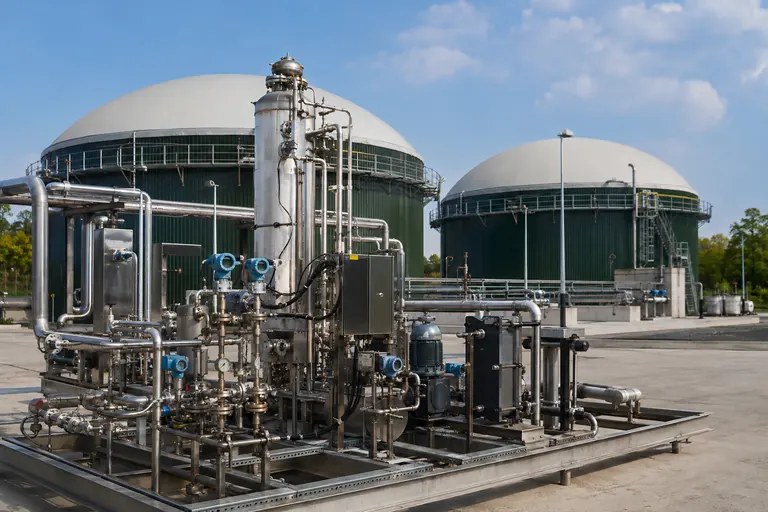
Operating a CBG plant means managing a biological process and an industrial equipment system together. Consistent feeding and process conditions support gas generation; reliable machinery, gas handling and dispatch turn that gas into a saleable product. The operating plan needs to cover both.
An O&M assignment should define staffing, supervision, consumables, preventive maintenance, specialist support and reporting. Responsibilities for major replacements, laboratory work, feedstock procurement and statutory compliance should be written into the scope so that daily operating decisions are not delayed by commercial ambiguity.
An operating review that connects cause and result
| Review area | Track together | Management question |
|---|---|---|
| Feed and biology | Wet feed, TS/VS, recipe changes, temperature and gas trends | Is the process receiving the planned organic load? |
| Gas conversion | Raw gas, methane fraction, recovery, off-spec gas and flaring | Where is potential saleable gas being lost? |
| Maintenance | Run hours, defects, planned jobs and repeat failures | Is work reducing failures or only responding to them? |
| Resources | Electricity, heat, water and consumables per consistent output unit | Has efficiency changed, or only the production level? |
| Safety and people | Permits, training, inspection findings and action closure | Are operating risks controlled on every shift? |
Altpreneur scope
How we approach the work
People and systems
Define staffing, shift responsibilities, competencies, operating procedures, permits and escalation routes. Align the assignment with the owner's production and safety obligations.
Process operation
Manage feed receipt, recipe control, plant monitoring and laboratory review. Track abnormal conditions before they become extended production losses.
Asset maintenance
Develop preventive-maintenance schedules, spares planning, lubrication and condition checks with vendor requirements and shutdown windows.
Performance reporting
Report gas production, quality, energy use, consumables, downtime and costs against an agreed baseline. Review trends and actions with management.
Decisions worth getting right
Separate operating limits from production targets
An output target does not authorise bypassing an interlock, overloading the digester or deferring a safety-critical repair. Plant-specific limits remain the controlling basis.
Use planned maintenance windows
Coordinate spares, isolation, specialist availability and production scheduling. Maintenance that repeatedly waits for a small spare can become a major availability loss.
Make the shift log useful
Record what changed, why it changed, who authorised it and what happened afterwards. A record of readings without the context of interventions is difficult to interpret.
Assignment outputs
What you receive
- Operating and maintenance responsibility matrix
- Shift and daily reporting formats
- Preventive-maintenance and spares plan
- Laboratory and performance-review schedule
- Monthly operating review
To begin
Useful starting information
- As-built drawings and equipment manuals
- Current staffing and maintenance history
- Production records and contractual commitments
Scope and responsibility
Feedstock procurement, major replacements, consumables, insurance and statutory obligations need clear contractual allocation. Output commitments must account for plant condition and client-controlled inputs.
Common questions
Can O&M cover an existing plant?
Yes. A mobilisation assessment should establish defects, documentation gaps, staffing needs and the starting performance baseline.
What should management review each month?
Saleable gas, quality rejections, feed cost, energy intensity, downtime causes, maintenance completion, safety actions and cash operating cost.
Evidence & further reading
Source material
- US EPA AgSTAR: Anaerobic Digester/Biogas System Operator Guidebook
- IEA Bioenergy Task 37: Process monitoring in biogas plants
Technical references inform the discussion. Final design, operating limits and policy eligibility depend on the project and applicable current documents.