
Ireland / Infrastructure & offtake
Ireland opens €32 million central biomethane injection hub
A shared grid-injection facility in County Cork allows biomethane producers to deliver compliant gas by trailer instead of building an individual pipeline connection.
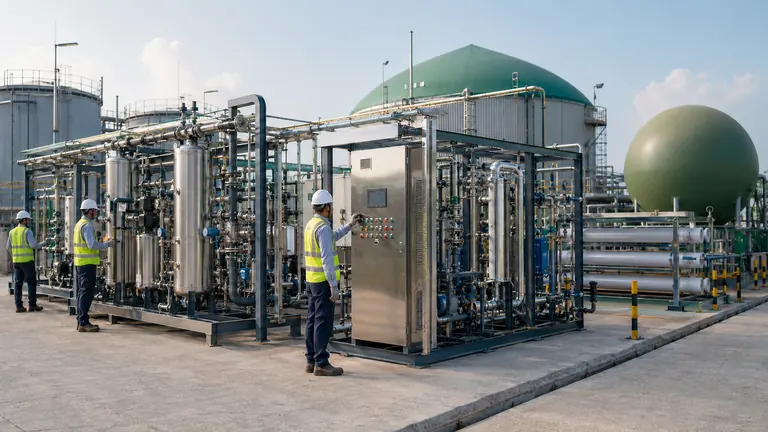
A shared route to the gas grid
Gas Networks Ireland has opened a €32 million Central Grid Injection facility at Mitchelstown in County Cork. The facility is designed to receive compliant biomethane transported by trailer from farm and food-waste digestion plants, check the gas against network standards and inject it into the national gas grid.
The model addresses a common development barrier: a producer may have suitable feedstock and upgrading equipment but still be too far from an economical direct pipeline connection. A shared injection hub can separate the location of the digestion plant from the point where renewable gas enters the network.
Infrastructure scale and support
Gas Networks Ireland states that the facility has completed commissioning and is ready for operation, with a rated injection capacity of up to 700 GWh annually. That is approximately 12% of Ireland's stated 5.7 TWh biomethane target for 2030. The wider GRAZE project received €8.4 million from Ireland's Climate Action Fund.
The capacity and target comparison describe the infrastructure's intended scale. Actual injected volumes, utilisation levels and deliveries from participating producers were not disclosed in the opening announcement.
Why the model matters to developers
A central injection hub can create a common infrastructure layer for several biomethane projects. Producers may avoid duplicating a long pipeline connection, while the network operator can concentrate gas-quality control, custody transfer, unloading and grid-entry systems at one location.
The arrangement also introduces new interfaces. Trailer movements, compression, unloading time, metering, gas-quality certification, scheduling and minimum throughput become part of the commercial chain. These costs and responsibilities must be allocated before a producer treats the hub as confirmed market access.
Questions for an Indian CBG cluster
Indian developers considering a shared injection or virtual-pipeline model can use the Irish project as a useful infrastructure reference, while recognising that Indian gas regulations, buyer arrangements and operating conditions are different.
A feasibility study should compare direct pipeline connection, cascade transport and a shared injection hub on an equivalent basis. The result should include both normal operation and a case where one producer or the hub is unavailable.
- Trailer distance, payload and round-trip time
- Compression energy and loading requirements
- Custody-transfer metering and gas-quality testing
- Unloading capacity and queuing arrangements
- Minimum contracted throughput and payment structure
- Responsibility for rejection, interruption and maintenance
Commercial lesson
The Mitchelstown facility shows that biomethane markets can be enabled by shared infrastructure, not only by plant-level subsidies. For developers, the key question is whether the hub can provide a dependable and affordable delivery route over the life of the project.
Before committing capital, sponsors should obtain written terms for access, quality, metering, scheduling, transport, charges and interruption risk. Infrastructure that is technically available but commercially undefined should remain a sensitivity in the financial model, not a guaranteed revenue assumption.
Evidence & further reading
Source material
- Gas Networks Ireland: Mitchelstown Central Grid Injection facility opening, 2 October 2026
- Gas Networks Ireland: Mitchelstown biomethane facility information
- Ireland Climate Action Fund
Technical references inform the discussion. Final design, operating limits and policy eligibility depend on the project and applicable current documents.